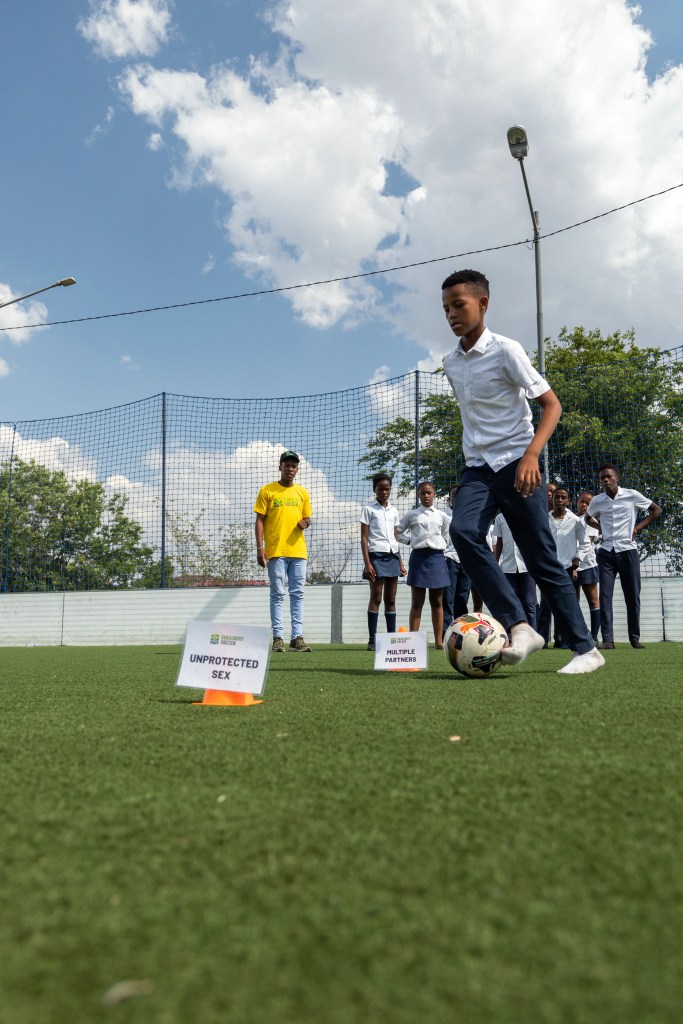
We use soccer games and metaphors to teach young people life-saving health information
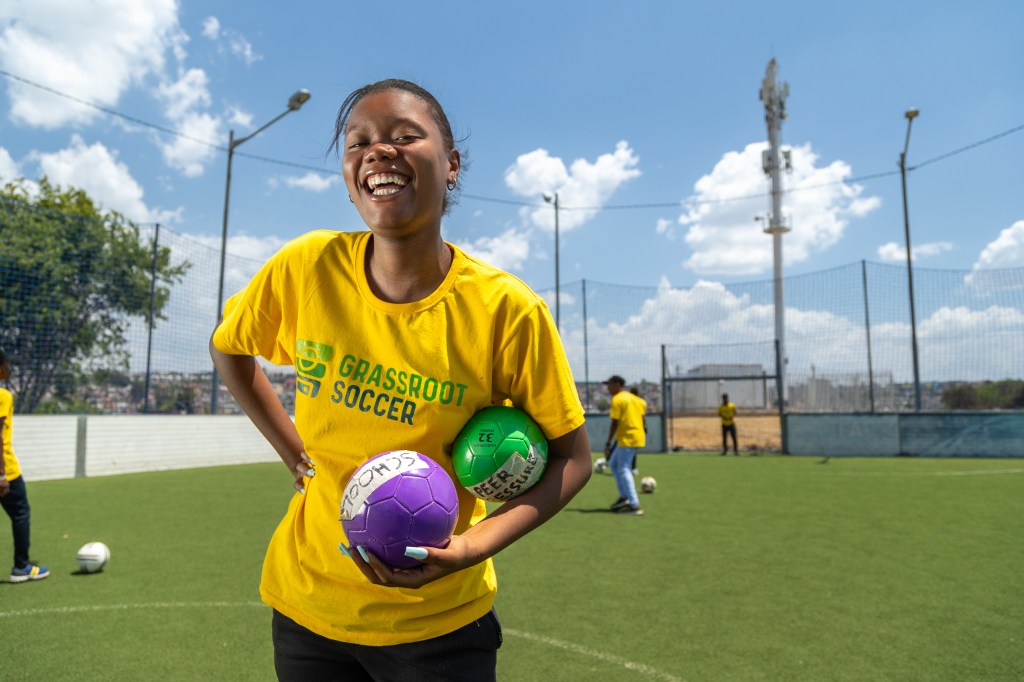
Our programs are designed with adolescents in mind. We recruit and train young, local leaders as “Coaches” to teach our activity-based SKILLZ programmes and serve as trusted mentors. Our Coaches make learning about tough health topics fun, so young people are truly engaged, they want to participate, and lessons stick.
We believe that soccer can change the world
Tackling local issues from poverty to HIV/AIDS will require a generation of young people who are strong, healthy, and empowered. Through data and research, we know our soccer-based approach is improving the health of thousands of young people – building their assets (health knowledge and the confidence to use it), improving their access to high-quality health services, and increasing their adherence to crucial treatments and healthy behaviors.
More than just a game
Soccer is the most popular and accessible sport across the globe – including in South Africa. We are using the power of soccer to engage young people around their most pressing, but often taboo, health challenges during a critical time of their development.

Adolescent Health Challenges in South Africa
HIV/AIDS
The estimated overall HIV prevalence rate is approximately 13.9% among the South African population. The total number of people living with HIV (PLWHIV) is estimated at approximately 8.45 million in 2022. For adults aged 15–49 years, an estimated 19.6% of the population is HIV positive.
Mental Health
1 in 6 South Africans suffer from anxiety, depression, or substance-use problems. 21 percent have post-traumatic stress disorder. For adolescents who self-identify as Black/Coloured and/or with material disadvantage, the rates of common mental disorders are even higher.
Sexual Reproductive Health & Rights
In South Africa, sexual reproductive health rights form part of the Constitution and are afforded to everyone, including adolescents. The Constitution acknowledges the right to identify your sexuality, the right to receive confidentiality, the right to access quality health services, and the right to education – including the right to comprehensive sexuality education.
Gender-Based Violence
The rate of violence against women and girls in South Africa is among the highest in the world. One in five women in relationships have experienced physical violence by a partner.
 Grassroot Soccer South Africa